

Quality assurance is probably not your favorite part of growing an e-commerce brand, but product returns and bad online reviews are definitely worse.
The good news?
They can both be drastically reduced with an effective quality management plan.
If you want happier customers, fewer returns, and more rankings, it pays to be proactive with your quality control processes.
Taking the extra steps to make 100% the product you ordered from your manufacturer is exactly what your customer ordered can save you tons of money and headaches, whether you’re starting a new e-commerce business or have been in the game for years. Ready to nail it?
Let’s dive in!
Just to clear up one potential point of confusion, remember that quality assurance and quality control are different parts of a quality management plan — though the terms are often used interchangeably. QA is more about process and prevention, while QC is about product and outcome assessment.
In other words, QA is the map to your destination. QC is the friend who lovingly tells you to go home when you’ve got lettuce in your teeth.
So while you’re judging the people who committed the following crimes against e-commerce, make notes of where your own QA and QC processes could be improved to prevent similar headdesk moments.
We’re not just here for schadenfreude. (OK, mostly, but not exclusively.)
Laugh it up, but keep in mind these examples result from quality assurance mistakes you could be making right now. Learn from them, and then take steps to do better!
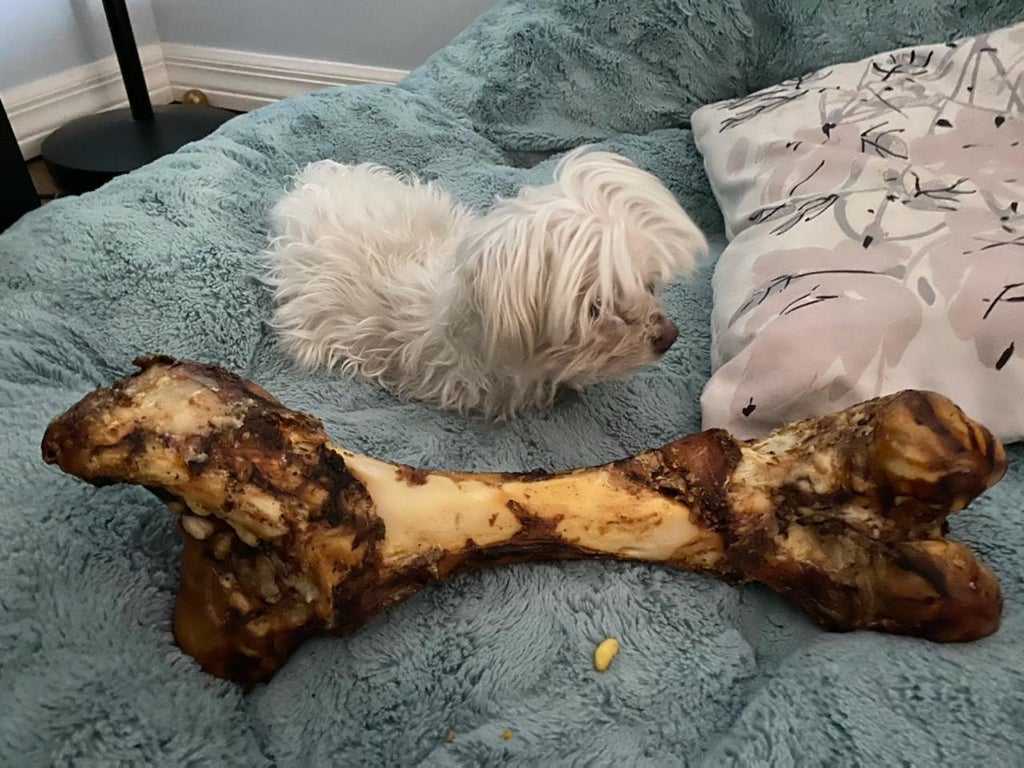
Not that this little dude’s complaining, but aren’t dog treats usually smaller than the dog?
[Image source: BuddyBonButt]
We’re not sure if this one’s a case of late-night drunk shopping, failure to read the description, or if it’s actually the seller’s fault. Regardless, let this be a visual reminder of the importance of getting the right product size to your customer (or their dog).
Here’s how to avoid this hilarious mix-up:

We’re sure the customer had great expectations for this dress. [Image source: tragicomisch]
When you order an elegant bodycon lace gown with a built-in bra, the last thing you expect to receive is a sheer sparkly potato sack, with only what appear to be nursing pads for modesty.
Nobody wants this kind of switcheroo from an online brand, but your products are likely passing through a lot of hands before they get to your customer. That’s especially true if you, your suppliers, and your customers are all in different countries.
Your reputation depends on your suppliers’ QA practices, so make sure you have a process to verify they’re providing what you’ve promised.
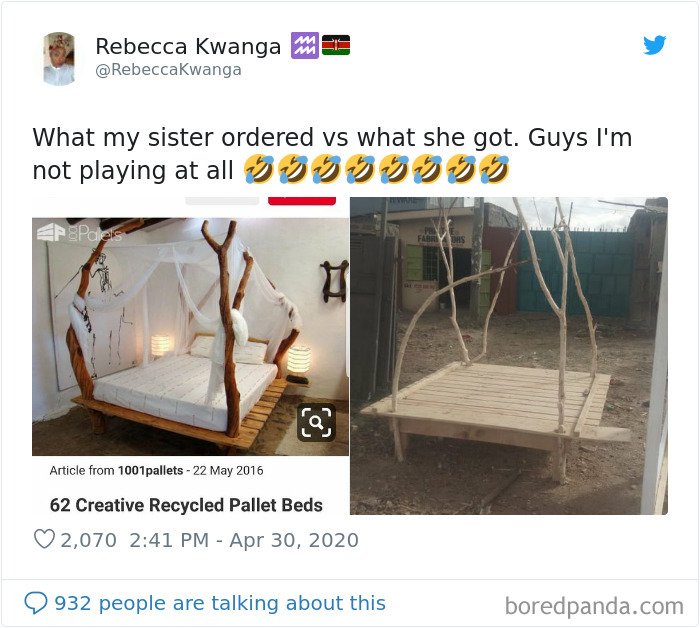
There’s rustic, and then there’s… [Image source: RebeccaKwanga]
Maybe this one can be chalked up to a third-party crafter who was asked to make something that looked great on Pinterest. At any rate, there’s clearly a difference between a rustic poster bed and whatever the heck this is. Forget about the choice of posts, what’s with that one randomly extra-long board?
If you have products made for you, whether custom or bulk, you know how important it is to ensure that everything is made to spec. This is not where you want to put your trust in that guy who cold DMed you — you have a business to protect.
Be a stickler about processes documented in advance, and follow up with both regular and unscheduled check-ins to make sure you stay out of the QA Hall of Shame.
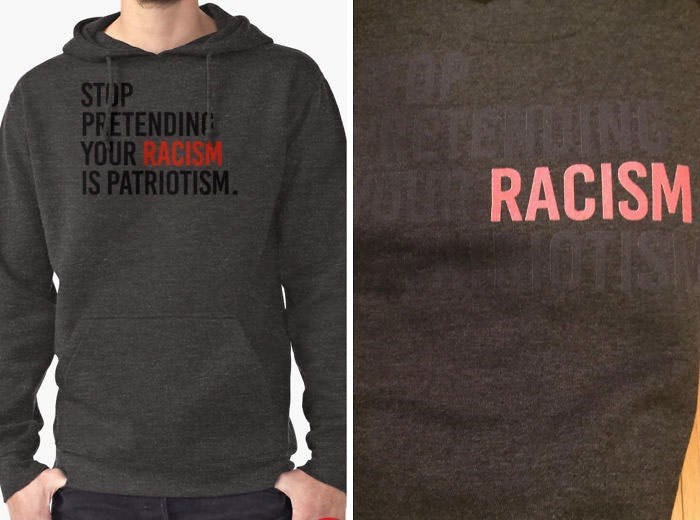
This sweatshirt is definitely missing something. [Image source: UnclaimedSocks]
When your statement piece creates more confusion than camaraderie, you know you’ve made a misstep. Imagine walking around just saying ‘RACISM’ to everyone on the street! Maybe as part of a psych experiment of some kind? Who knows how that would end?
Hopefully, you spotted the problem here immediately. Fabric and other base materials in a new color can dramatically impact the end result of a design, particularly when there’s so little room for error in the design’s contrast ratio.
Check how your designs read on different colored backgrounds, and always run test pieces when you have to switch to a new color, fabric, or supplier. You’ll catch a lot of bloopers before the internet ever knows they happened!
Sign up for our free newsletter and get straightforward e-commerce advice you can actually use!

We so appreciate that this guy donned the hat for full effect. [Image source: UnclaimedSocks]
Okay, so this guy was never going to fool anybody with a terrifyingly believable T-rex costume. But to deny him the chance to try, and send him a unicorn in its place? That’s just cold.
What this retailer made up for in whimsy, it lacked in attention to detail. Be the wingman your customers count on, and make sure every packing slip is double-checked for accuracy before sealing and shipping. You don’t want to ruin some glitter-loving kid’s birthday by sending them this guy’s dinosaur, do you?
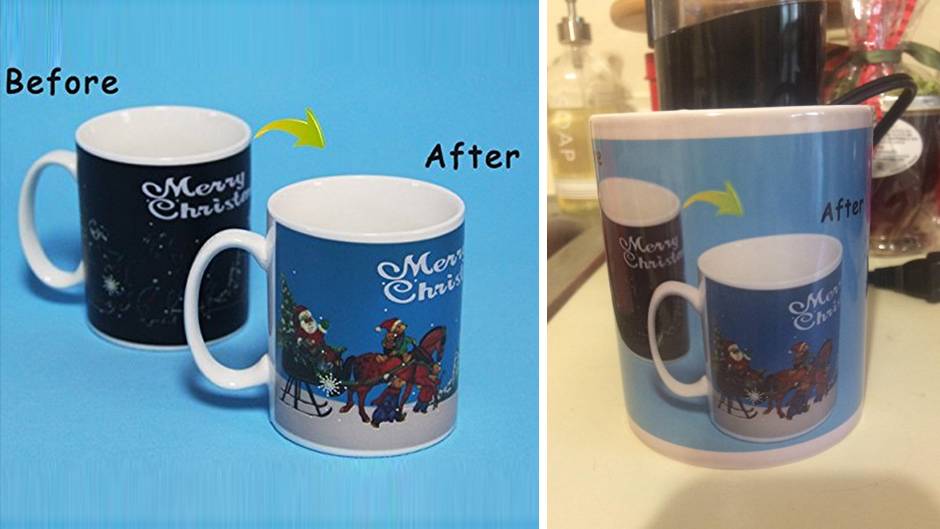
Jack Frost nipping at your profound sense of disappointment. [Image source: Pens and Patron]
How many people must have seen this design as it went to production and thought, “Yeah, that looks right”? Is there a market out there for meta mug designs? Are there collectors searching for mugs that pay homage to the mugs that could have been?
More likely, this production was outsourced to someplace without rigorous QA processes, and a lack of oversight led to this customer being rightfully disappointed.
Listen, there’s no one right way to store and share your product images and design assets. But whatever this manufacturer did was probably not the best way to handle it. Prevent QA mishaps like this by following a system for organized asset sharing all the way down the supply chain. And for the love of all that is online shopping, make sure your quality control checks will catch anything this egregious before it ships!
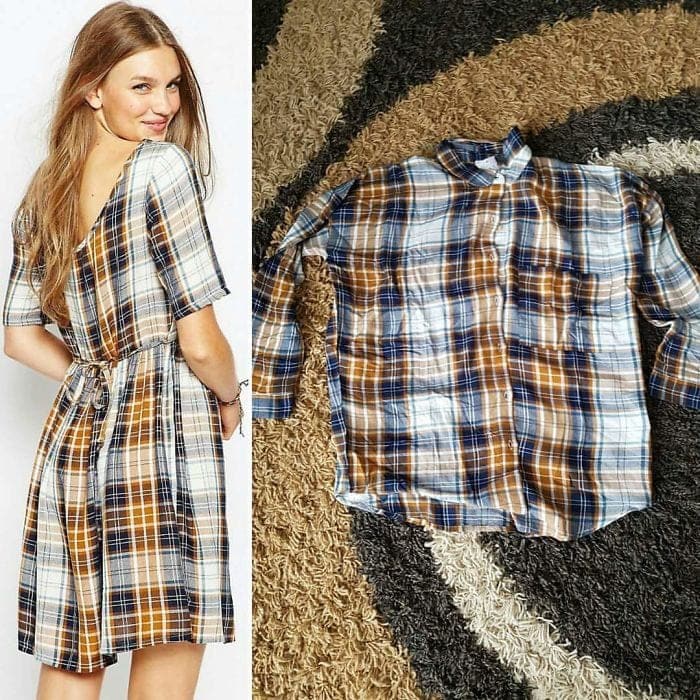
Does this dress make my failures look big? [Image source: Pens and Patron]
This garment has the rare distinction — in the ‘online shopping fail’ space — of being cut from the same fabric as the advertised piece. But nobody’s mistaking this collared button-up for a scoop-back shirt dress.
Could this have been a picking error, with similar-looking parcels next to each other and no time to check the label? Could the manufacturer have filled an order entirely from the wrong sewing pattern, and nobody along the way noticed?
Whatever the case, as the seller, the buck stops with you. So look for any possible points of confusion in your (and your suppliers’) processes, and revamp each step so anyone could do it half-asleep. Because they probably will.
These epic QA failures are all examples of preventable mistakes that you can eliminate from your e-commerce business. Go back to your own quality management plan and build in as much clarity as you can, making sure there are a few redundant checkpoints, just to be on the safe side.
Here’s how to drill down on the details in each part of your quality management plan:
And remember: Include every supplier and contractor in your quality management plan.
After all, everything they deliver reflects back on you.
Between your newly revamped standards, QA guide, and QC gatekeeper, there should be very few slip-ups like the ones included here.
With updated quality management systems, you can drastically reduce both the number of costly product returns and the wrath of the internet.
We promise it’s well worth the effort.
Put a detailed plan into place now, and you’ll save a lot of headaches down the line. Not to mention, you’ll be able to make more sales and not only attract but also keep new customers. And those loyal fans will bring even more customers your way.
All because you took the time to ensure your product quality is consistently excellent. Pretty sweet deal, if you ask us.
